Rainwater Collection Gutter Build for a Montana Homestead
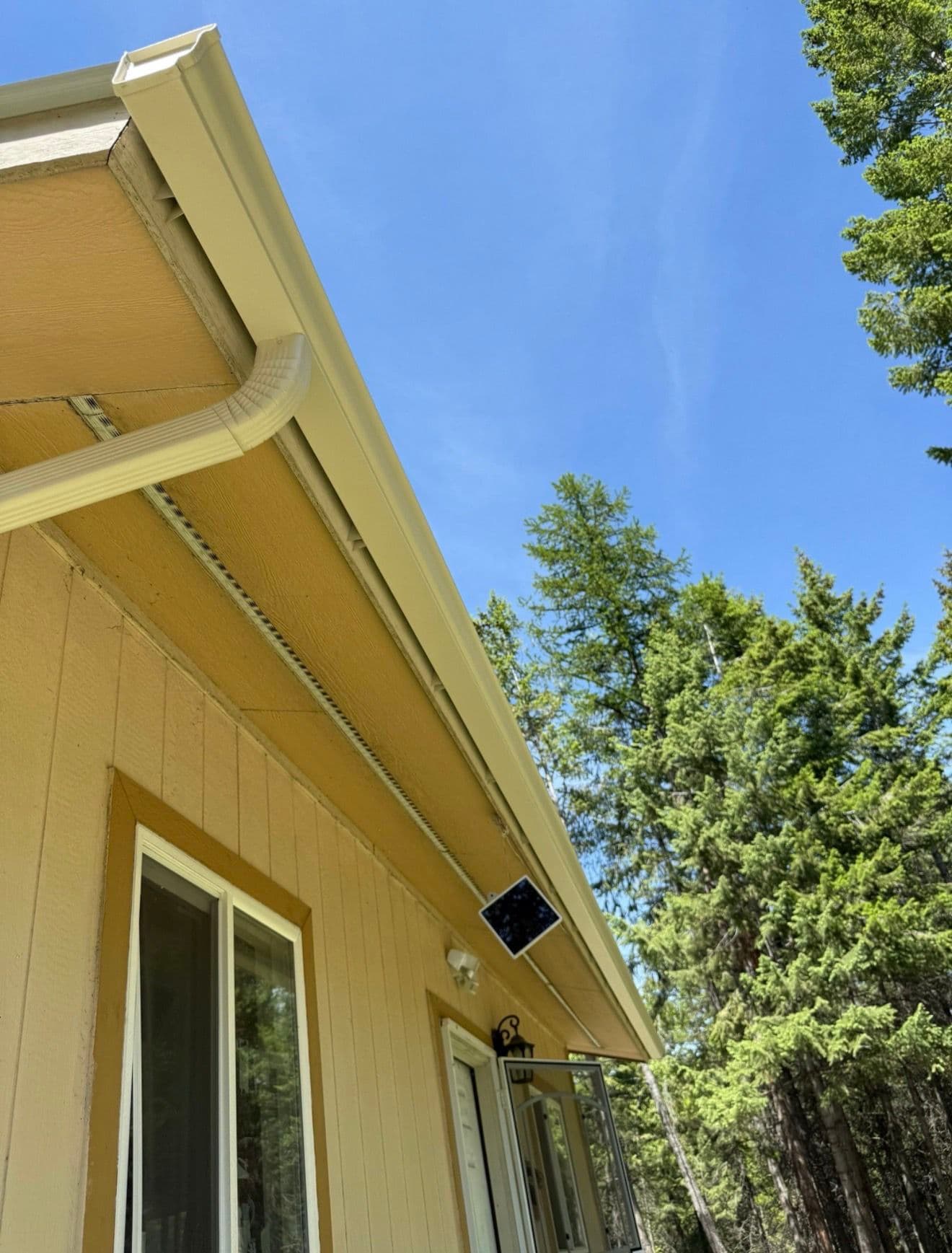
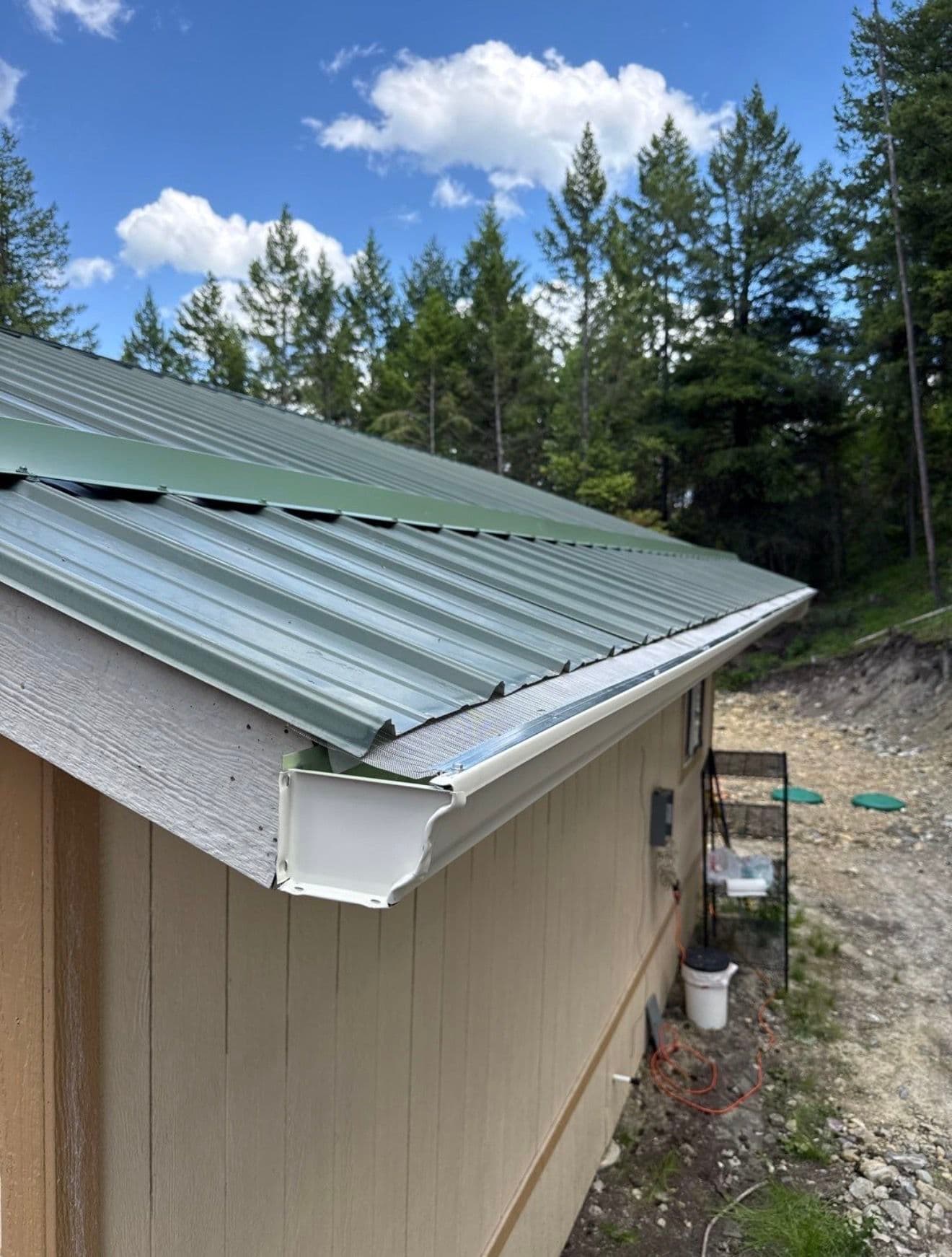
This one had a purpose beyond just managing runoff. The homeowner wanted to capture clean rainwater and route it into a storage tank used to water apple trees down the hill. So every piece of this install had to work together - the gutters, the guards, and the supports - all of it feeding a system that actually does something useful.
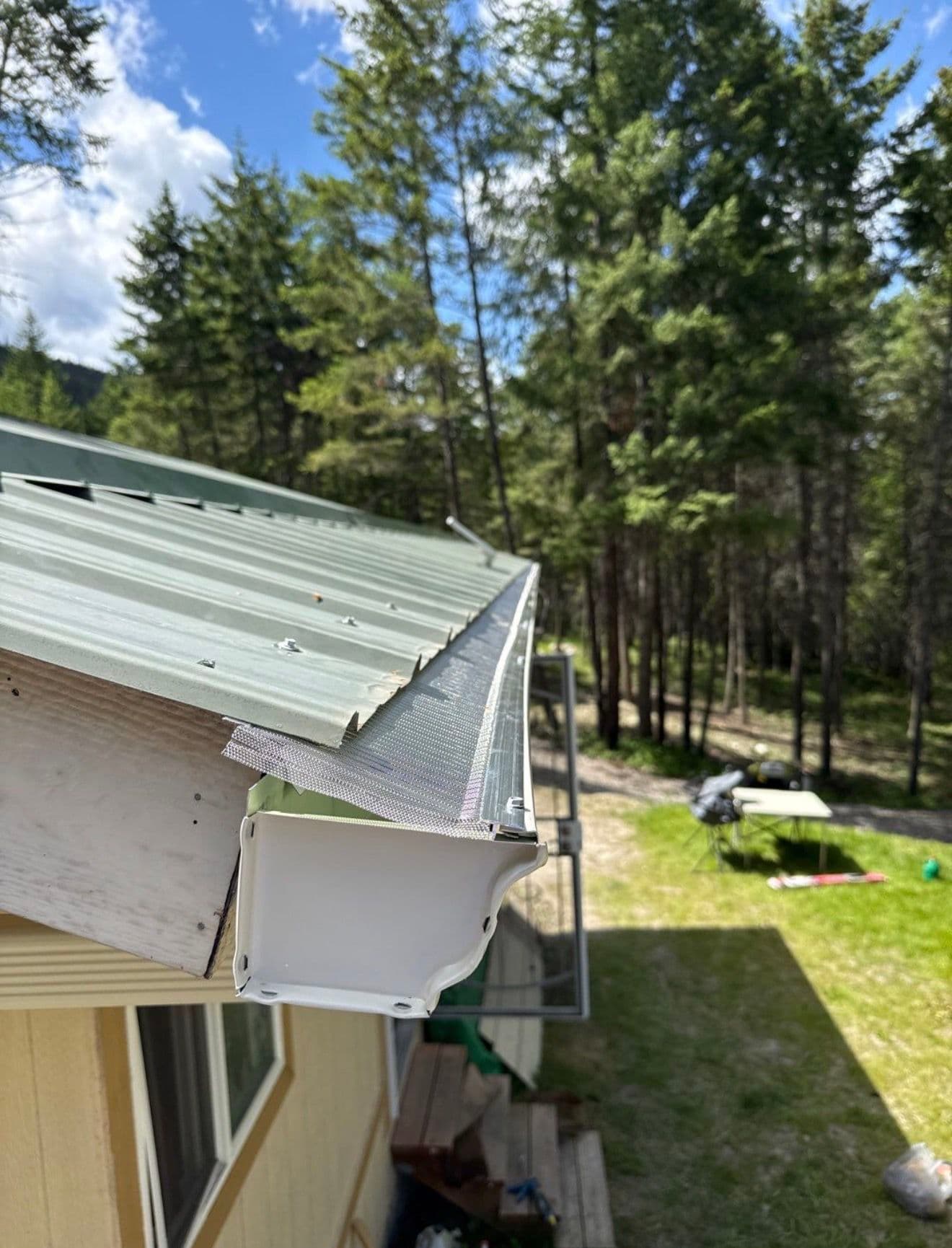
We started by thinking about what the water would encounter on its way down. Surrounded by pine trees, this roof was going to see heavy needle drop all year long. Pine needles are one of the worst things for gutters - they mat down, hold moisture, and clog everything fast. That's why we went with stainless steel micro-mesh guards. The mesh is fine enough to block needles while still letting water flow through cleanly into the collection system below.
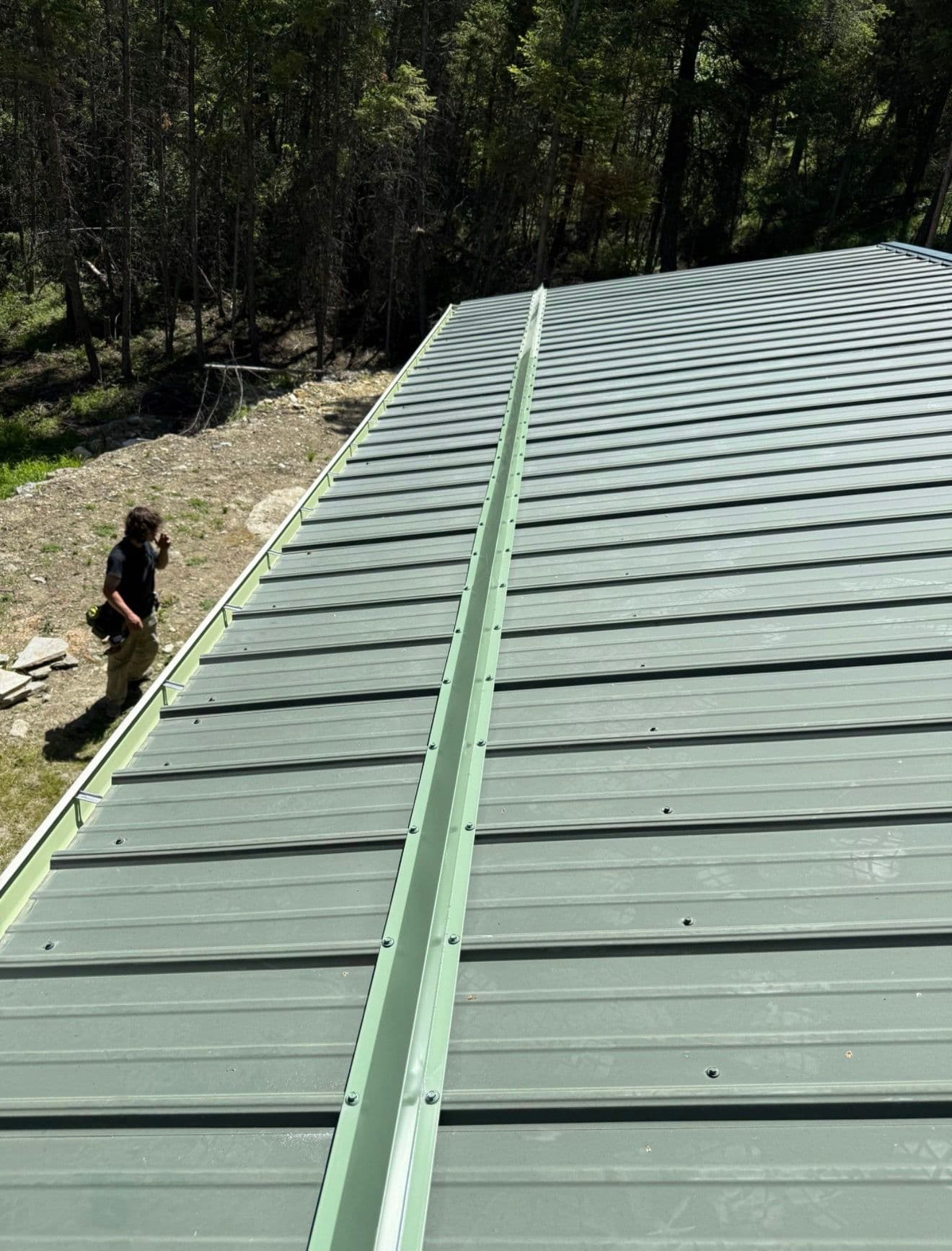
Montana weather also played a big role in how we engineered the support. Snow loads here aren't something you can ignore. We added snow breaks to help manage sliding snow off the metal roof, and used heavy-duty gutter hangers to make sure the gutters themselves stay put through freeze-thaw cycles and the weight that comes with a hard winter. This isn't a standard residential install - it needed to hold up like one built for the long haul.
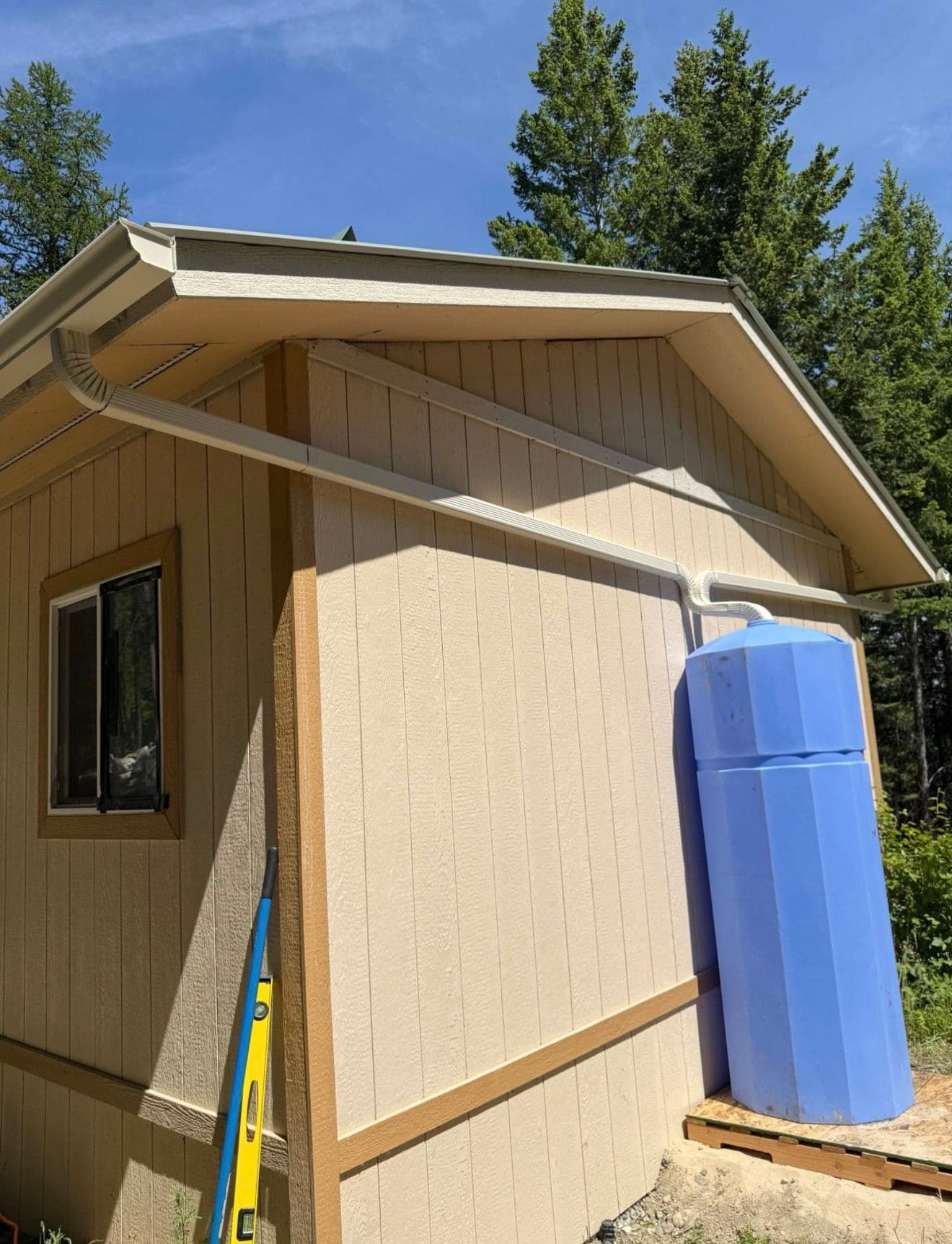
The downspout routes directly into a large water storage tank sitting right at the corner of the building. Clean, filtered water goes in. No debris, no pine needles, no sediment clogging up the tank. For someone relying on that water to keep trees alive through dry stretches, that reliability matters a lot.
Not every gutter job looks the same, and this is a good example of that. When the goal is rainwater harvesting, the details - guard type, hanger strength, downspout placement - all have to be dialed in from the start. We enjoy these kinds of installs because there's a real reason behind every decision we make.